PCB PROCESSING

/ Efficient PCB routing and safe panel separation with SycoTec RS milling spindles

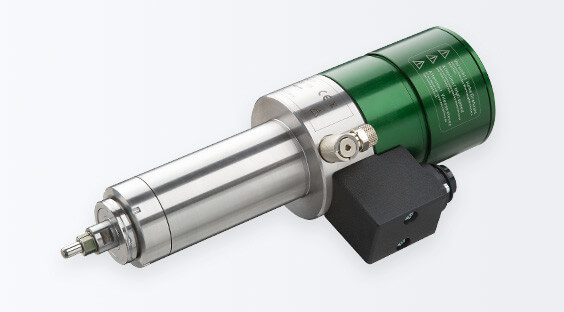
When it comes to PCB depaneling and panel separation, the focus is on minimizing mechanical stress while maintaining high throughput volumes. A safe, fast, and precise milling process with high speeds is the key to success—and this is exactly where our innovative ESD milling spindles come into play. The new RS spindle series from SycoTec sets a new standard in PCB processing. High-speed milling spindles enable gentle routing and depaneling, which both protects the quality of the circuit boards and guarantees maximum efficiency. Thanks to state-of-the-art technology and a well-thought-out overall concept, our ESD spindles offer optimal protection against electrostatic discharge, thereby ensuring maximum process reliability. Trust SycoTec for your PCB routing and PCB depaneling – for reliable panel separation with precision and speed.

Key facts about the SycoTec RS spindle series

  • Highly accurate and rigid shaft systems
  • Highly efficient and powerful engines
  • Separation of FR3, FR4, aluminum, and other printed circuit boards
  • Wear-free ESD protection (ESD2.0)
  • Uncooled operation possible
  • Coordinated system from a single source (spindle, collet, cable, converter, etc.)
  • Pneumatic tool change with low pressure requirements.
Optional: Compressed air-free system with electric tool change.
Motorspindelreihe RS für ESD Leiterplatten
ESD Logo Leiterplattenbearbeitung

ESD2.0 – maintenance-free ESD protection

With the RS series, SycoTec has developed the first PCB spindles with wear-free ESD protection. The shaft is grounded using specially developed grounding rings, ensuring safe discharge across the entire speed range.

  • No wear
  • No need to change carbon brushes
  • No control necessary

= 100% secure ESD function.

Product overview

STANDARD MACHINING (FR-4)
Type Speed [rpm] Power [W] Clamp [mm] Tool change Cooling Sealing
RS 33 AC 80 000 500 Max Ø 4 Pneumatical Air or water Air
POWER MACHINING (FR-4 & Aluminum)
Type Speed [rpm] Power [W] Tool [mm] Tool change Cooling Sealing
RS 33 DC 60 000 450 Max Ø 4 Pneumatical Uncooled Airfree
RS 33 DC-Pro 80 000 650 Max Ø 4 Pneumatical Uncooled Airfree
RS 45 DC 60 000 780 Max Ø 6 Pneumatical Uncooled Air

FAQ

ESD stands for electrostatic discharge.

Electrostatic charging occurs, for example, due to friction between the tool and the circuit board during the milling process. This electrostatic charging can reach discharge potentials of several kilovolts to megavolts. If ESD protection is inadequate, no conducted discharge can take place and the discharge occurs either via the circuit board being processed or via the ball bearings of the milling spindle.

Discharge via the circuit board = potential damage to electrical components.

Discharge via ball bearings = damage to ball bearings due to micro-welding and drastic reduction in service life.

To ensure safe discharge during the milling process, an electrically conductive connection between the rotating shaft and the spindle housing (GND) must be implemented in the milling spindle.

Depaneling of printed circuit boards and discharge via electronic components
Depaneling of printed circuit boards and unloading via motor spindle

Discharge via steel ball bearings:

There is no active ESD protection installed in the spindle. The discharge occurs via the roller bearing.

Problem: The lubricating film between the ball and the raceway creates an “insulating” layer during rotation, and the electrostatic charge must reach a certain level to break through this layer. This causes micro-welding between the ball and the raceway, which significantly reduces the service life of the ball bearings.

Information:

Modern motor spindles: Modern motor spindles are equipped with high-performance hybrid ball bearings (ceramic balls and steel rings). These hybrid ball bearings offer many mechanical advantages over standard steel ball bearings and are also electrically non-conductive, protecting the raceway from electrical discharge.

ESD protection via carbon brushes:

Spring-loaded carbon brushes create a secure, electrically conductive connection between the rotating shaft and the housing. The carbon brushes for high-speed milling spindles are made from special compounds to ensure a long service life and low wear.

Problem: The spring-loaded carbon brushes are subject to wear. Tolerances in the carbon mixture and the surface roughness of the rotating shaft cause varying rates of wear. Regular inspection and, if necessary, replacement of the carbon brushes is necessary.

ESD protection via SycoTec ESD2.0:

With the RS series, SycoTec has developed the first PCB spindles with wear-free ESD protection. The shaft is grounded using specially developed grounding rings, ensuring safe discharge across the entire speed range.

  • No wear
  • No need to change carbon brushes
  • No control necessary
  • 100% secure ESD function.
Technology ESD via steel ball bearings ESD via carbon brushes ESD2.0
Ball bearing service life 500–6,000 hours > 6000 hours > 6000 hours
Service life ESD function = ball bearing > 3000 hours unlimited
General information on materials and surface resistances

1 Materials that are conductive. They have a low resistance of less than 105 Ω and ensure that the charge is quickly discharged. If such materials (e.g. metals and carbon) are earthed via a connection, the entire charge flows off.

2 Materials that are dissipative discharge charges over a longer period of time. Their surface resistance is between 105 and 1011.

3 Materials with a surface resistance of more than 1011 have an insulating effect. They cannot dissipate existing charges and are electrostatically chargeable. This is a particular problem in the electronics industry, as they form charge islands that pose a danger to unprotected modules and must be avoided. Insulators are for example air, glass and plastics.

Limit values according to standards and guidelines
Guideline BGR132
Limit values according to standards and guidelines
The table from BG guideline ZH 1/200 (current name BGR132) gives a short overview of the electrostatic behaviour depending on the surface resistance.

Standard DIN EN 61340-5-1 Protection of electronic devices from electrostatic phenomena – general requirements
In Standard DIN EN 61340-5-1 recommendations for electrostatic protected areas (EPA) are given.

DIN EN 61340-5-1 Limit values according to standards and guidelines
Standards or guidelines for the routing process

According to information from SycoTec, there is no standard or guideline that covers the necessary contact resistance for the process of milling printed circuit boards. Limit values for the contact resistance between the milling tool and the protective conductor must be specified by the end user.

In general, however, surface resistance values of less than 109 Ω (less than 1 gigaohm) enable safe discharge.

An aluminum printed circuit board, also known as an IMS (Insulated Metal Substrate) printed circuit board or aluminum printed circuit board, is a special type of printed circuit board that uses an aluminum core as the substrate material instead of fiberglass (FR4).

The cutting performance and thus the required torque is higher for aluminum circuit boards than for FR4.

RS33 DC and RS45 DC are very well suited here.

Sealing air is not necessary in printed circuit board processing.

Pressure for tool change: 4.5 bar directly at the spindle guarantees safe and reliable loosening of the tool.

The RS33-xC series is also available with optional electric tool change. This option allows a compressed air-free spindle system to be set up, enabling completely independent operation without external media.

The electric tool changer from SycoTec has been in series production since 2022 and is extremely reliable. It requires only 24V DC / 2 A for power supply. Activation / deactivation is via a 24V digital signal.

The new RS spindle series features a high-precision shaft/bearing system. In combination with the modern C3 and C5 direct shaft clamping systems, this results in the following:

The concentricity in the clamping cone is < 1µm.

The concentricity accuracy on the tool, 20 mm after the collet, is typically < 5 µm.

No sealing air is required for the RS series. Sealing in dry operation is achieved by means of a suitably dimensioned labyrinth.

For spindles with AC motors (RS33 AC), sealing air is sometimes necessary to assist cooling.

AC spindle motor: Cooling via barrier air is usually sufficient. In some cases, it may be necessary to take additional measures.

  • Improve thermal connection to clamping block.
  • Active water or air cooling of the clamping block.
  • Adjustment of parameter set for lower magnetization (= reduced electrical losses).

DC spindle motor: No active cooling required in PCB applications.

Recommendation: SycoTec converters 4330 and 4625

Sieb&Meyer and BMR: Unreserved recommendation. SycoTec adjusts the appropriate motor parameters.

Other third-party providers: SycoTec is happy to support the use of other third-party devices. However, parameterization and commissioning must then be carried out by the customer.

Please note: For third-party devices, an additional motor choke often needs to be used for DC spindle motors.

Depending on the converter used.

The following wide-range power supplies are usually sufficient:

  • Logic: 24 V DC / 2A / 50W
  • Power: 48 V DC / 10 A / 500W

Custom designs are common in order to integrate the spindle optimally into the machine.

We strongly recommend discussing the design with your SycoTec contact person once it has been completed. Using the 3D data, we can evaluate the clamping situation and calculate the permissible/required tightening torque.

Caution: Incorrectly dimensioned clamping blocks or excessive clamping force can significantly reduce the service life of a motor spindle.

RS33 AC-ESD

The standard solution for FR-4 circuit boards.

Successor model to the widely used 4033 AC-ESD.

High speeds and robust spindle design.

RS 33 AC ESD-Spindle

Recommended standard configuration:

Supply module Inverter Cable Collet chuck
UHP 500-48 4330 915 C3

Alternative, compatible accessories: Product page RS33 DC-ESD

RS33 DC-ESD

Economical, highly efficient spindle solution for FR4 and aluminum.
High torque allows the machining of aluminum circuit boards.
Uncooled operation thanks to highly efficient DC motor.
Extra-long service life thanks to good thermal behavior and generously dimensioned ball bearings.

RS 33 DC ESD-Spindle

Recommended standard configuration:

Supply module Inverter Cable Collet chuck
UHP 500-48 4330 915 C3

RS45 DC-ESD

Extra-rigid spindle solution for all PCB applications.
High torque allows efficient processing of all types of printed circuit boards.
Uncooled operation thanks to highly efficient DC motor

RS 45 DC ESD-Spindle

Recommended standard configuration:

Supply module Inverter Cable Collet chuck
UHP 500-48 4330 915 C3

Motor spindle RS33 DC-ESD2.0

  • Suitable for FR4 and aluminum circuit boards
  • Uncooled operation thanks to highly efficient DC motor
  • Maintenance-free ESD protection thanks to ESD2.0
  • Sealing without barrier air for easy setup
  • Long service life thanks to thermally uncritical design and generously dimensioned ball bearings
  • Pneumatic tool change with 4.5 bar (non-critical compressed air supply)
  • Optional: electric tool change
  • Good availability
RS 33 DC ESD-Spindle

Inverter 4330

  • Maximum performance in the smallest installation space
  • Easy integration via digital/analog signals
  • Throttle-free operation of DC motors
  • Good availability
Frequency inverter 4330 IP00
Frequency inverter 4330 (IP00 version)

Standard power supply module UHP48-500

  • Compact design
  • Cost-effective and reliable
  • Good availability
Power supply UHP 500-48

YOUR CONTACT

Heiner Bertele
Area Sales and Product Manager Motor Spindles
Phone: +49 7561 86-353
Email: industrial@sycotec.eu  
Configuration
Scroll to Top
Share configuration